
Kilimaya Reserve in Way of the Hunter 2: the 100 km2 Africa map, its 13 species, which predators can charge you, and how to hunt hippo and buffalo safely.
Way of the Hunter 2 Kilimaya Reserve: Africa Map, Animals and Tactics
Kilimaya Reserve is the Africa map in Way of the Hunter 2: 100 km² of hunting ground with 13 species, added in Early Access Update 0.2.0 on May 27, 2026. As of Update 1.1 (build 212672, October 2026), only three of those 13 can charge you — the southern lion, the common hippopotamus and Cape buffalo — while the Nile crocodile and the spotted hyena are still non-aggressive. That distinction is why Africa plays differently from North America, and the rest of this page is built around it.
Kilimaya Reserve Facts
| Item | Value | Source |
|---|---|---|
| Size | 100 km² (38 sq mi) | Nine Rocks Games FAQ |
| Size at map launch | 100 km2 (40 square miles) | Update 2 patch notes, May 27 2026 |
| Species | 13 | Official FAQ, Kilimaya list |
| Species that can charge you | 3 — southern lion, common hippopotamus, Cape buffalo | Official FAQ and Update 2 notes |
| Story angle | Safari guide, archery expert, retired huntress, ecosystem balance | Steam store page |
| Season Pass trophy statue | Kudu statue in Kilimaya Reserve | Official FAQ verification steps |
| Build covered | Update 1.1, build 212672, as of 2026-10-03 | Steam announcement |
The two sources disagree on area: the launch notes say 40 square miles, the FAQ says 38 sq mi for the same 100 km². Use 100 km² — that number is identical in both. Kilimaya matches New Laurentia in size, while the third map, Hearth & Hunt Headquarters, is a 16 km² lodge hub; the breakdown of all three maps covers how they differ in play.
Official source: Nine Rocks Games — Way of the Hunter 2 FAQ
The 13 Species You Can Hunt in Kilimaya
| Species | Can charge the player |
|---|---|
| Greater kudu | No |
| Blue wildebeest | No |
| Nile crocodile | No |
| Spotted hyena | No |
| Blesbok | No |
| Cape mountain zebra | No |
| Common hippopotamus | Yes |
| Cape honey badger | No |
| Southern lion | Yes |
| South African ostrich | No |
| Cape buffalo | Yes |
| Southern yellow-billed duck | No |
| Southern common warthog | No |
Twelve of these 13 arrived together in Update 0.2.0, the patch that launched the map on May 27, 2026. The southern common warthog is the exception: it is on the current list but absent from that patch's species list, so it turned up in a later update we could not pin to a single changelog.
No official per-species habitat breakdown exists for Kilimaya, so treat any "hippo here, zebra there" map as community guesswork. What developers do document is how you find animals: tracks are created dynamically between need zones, and spooked animals drop temporary tracks as they move. For the species framing across both maps, see the complete 28-animal list.
One naming quirk: the May 2026 notes flagged the Nile crocodile showing in the in-game encyclopedia as the Ethiopian crocodile and promised a correction. The current FAQ calls it Nile crocodile — we could not verify what the encyclopedia shows in 1.1.
The Three Animals That Charge You
The Update 2 notes shipped the system itself:
Added: Charging mechanics - Southern lion, Common hippopotamus, and Cape African buffalo can now charge the player. This is the first version of the system, which will be improved and expanded to additional animals over time.
Official source: THQ Nordic — Early Access Update #2 Patch Notes
The FAQ restates it as current: "Predator behavior (including charging/aggressive reactions) is currently a work in progress and has so far been implemented for three species, Southern Lion, Common Hippopotamus, and Cape African Buffalo."
The Steam store page sells the region as home to "massive hippos, thunderous buffalo, prowling lions, and stealthy Nile crocodiles" — note the gap. The crocodile and hyena sit in that marketing line but not on the implemented charge list. Nine Rocks plans to expand this behaviour to more species and add random attacks, so read this as a snapshot of 2026-10-03, not a permanent rule.
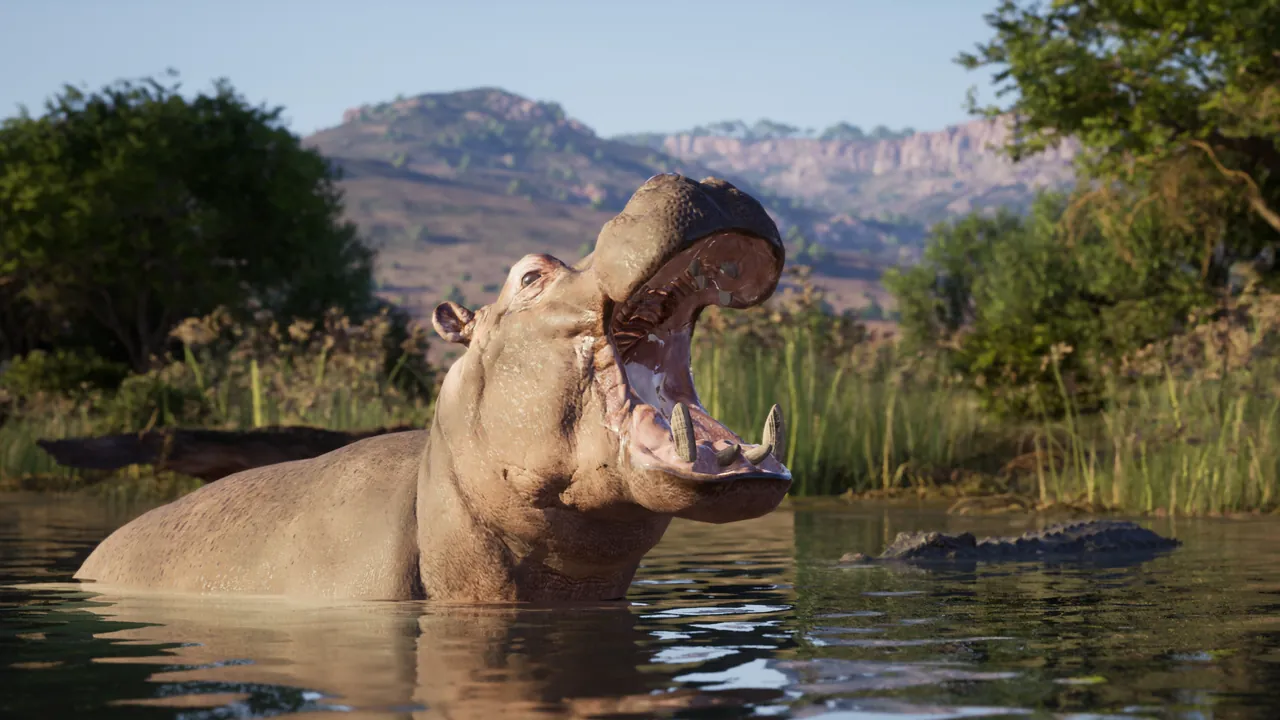
No official source documents a safe distance, a wind threshold, or any way to disarm a charge. The advice below is a practical read of a system where exactly three species can close on you — not a developer rule.
Look at where each one hunts and the pattern is obvious. All three are big, and all three push you toward water, mud or open ground where a wounded animal has room to run at you. Hippo work is a water-edge problem, buffalo is a herd problem where one animal breaks and the rest follow, a lion an open-ground problem where glass and distance are your only edge. Shoot from further out than feels necessary, and never walk up to a downed animal — the charge behaviour is not tied to whether the animal is alive.
Vehicles, Water and Known Rough Edges
Kilimaya has vehicles: Update 2 fixed inventory loss when fast-travelling from a flipped vehicle, and 1.0 fixed female blue wildebeest passing through vehicles.
The May 2026 notes listed a batch of reserve-specific issues. Whether all are gone in 1.1 we could not confirm, so check the known issues page before filing your own report:
| Issue reported in the Update 2 notes | Area |
|---|---|
| Animal territories set incorrectly in some cases | Gameplay |
| Water surfaces with incorrect collision boundaries | Water access |
| Incorrect marker on Damian after his Kilimaya storyline | Missions |
| Loading Kilimaya crashes on Intel 13th/14th gen i7/i9 with an RTX 4090 | Hardware |
That last row is a CPU power-delivery issue the map happened to trigger, not a reserve bug; the documented workaround is downclocking turbo ratios slightly with ThrottleStop or similar. The system requirements page covers the two conflicting official hardware lists.
Weather, Tracking and Your Dog
Update 1.1, released October 1 2026, added a long-term weather forecast you can pick per reserve, with one catch: changes take effect after 48 in-game hours, so set it before the session, not during. The snowfall-probability setting is separate from animal ageing.
Tracking works as it does on the North American grounds: dynamic tracks between need zones, temporary tracks from spooked animals, and a 1.0 high-contrast option for signs and tracks. Your dog searches for signs, locates active life zones and follows blood trails after a hit — advanced dog training is a post-launch update, and there are no extra breeds in 1.0. The tips page on tracking, wind, calls and your dog covers the full loop.
Story Missions and the Kudu Statue
Kilimaya is not a blank map. The store description frames it as supporting a renowned safari guide, training with an eccentric archery expert and tracking down a legendary retired huntress while maintaining ecosystem balance. Update 2 added new Hearth & Hunt characters with their own missions, and 1.0 fixed missing objective markers on two missions.
The kudu statue in Kilimaya Reserve is one of three trophies the FAQ tells you to look for when verifying a Season Pass. The same FAQ warns the elk statue is not part of it — that one belongs to the Heirloom Pack, a separate purchase. The Season Pass page has the verification chain.
Ammo and Gear Notes
Two details from the same patch lineage matter here. The Terra Fractal TR compound bow shipped in Update 0.2.0, the update that introduced the map, and bows and crossbows have accepted an ammo-type selection since 0.5.0. Suppressors are functional gear, not cosmetic: the FAQ says they can directly affect gameplay.
Ammo Change caps what you carry: two magazine groups with no backpack, four with the default pack, six with the large pack, one free default ammo type per weapon and the rest bought in the Shop. That cap bites harder on a 100 km² reserve than on a single hunt, so read best weapons and ammo after the ammo change first.
FAQ
Is Kilimaya Reserve bigger than New Laurentia? No. Both are 100 km², though the launch notes rounded Kilimaya to 40 square miles and the current FAQ says 38 sq mi. The third map, Hearth & Hunt Headquarters, is 16 km².
Can you get attacked by animals in Kilimaya? Yes, but only by three species as of Update 1.1: southern lion, common hippopotamus and Cape buffalo. The spotted hyena and Nile crocodile do not currently charge, despite both being sold as dangerous African wildlife.
How many animals are in Kilimaya Reserve? 13 in version 1.0, out of 28 across both hunting grounds. Twelve were named in the May 27 2026 Update 2 notes; the southern common warthog was not on that list.
Do tracks work in Kilimaya? Yes — tracks are generated dynamically between need zones, and spooked animals leave temporary tracks, which is how you follow a herd that breaks away.
Is Kilimaya in the base game or DLC? Base game — one of three maps in the standard package, and the only African map at launch. Two more maps are planned for the first year, with a European reserve planned but not among the next two.
More Way of the Hunter 2 Guides
Way of the Hunter 2 known issues after launch: the demo config fix for broken resolution settings, plus how to report a bug.
All 3 Way of the Hunter 2 maps with exact sizes: New Laurentia and Kilimaya at 100 km2 each, Hearth & Hunt at 16 km2. What each holds.
How to play co-op in Way of the Hunter 2: how to invite a friend, open a lobby, join a session, and the 2-player limit that trips people up at launch.
New Laurentia in Way of the Hunter 2: the 100 km2 North America map, its 15 species, elk and moose behaviour, need zones, tracks and hunting pressure.
Way of the Hunter 2 update 1.1 summary: weather forecast, inverted look, controller deadzone fixes, what is still broken, and how to report bugs.
Way of the Hunter 2 costs $39.99 or $59.99 deluxe. What the 8-DLC Season Pass adds, what Heirloom Pack includes, and how game 1 owners save.
Way of the Hunter 2 Season Pass: 8 DLCs in year one, $34.99, release window, what is inside right now, and the three statues that prove it worked.
Way of the Hunter 2 on Steam Deck: the developer says it is not officially supported. What happens when you try, and whether it is worth it.